
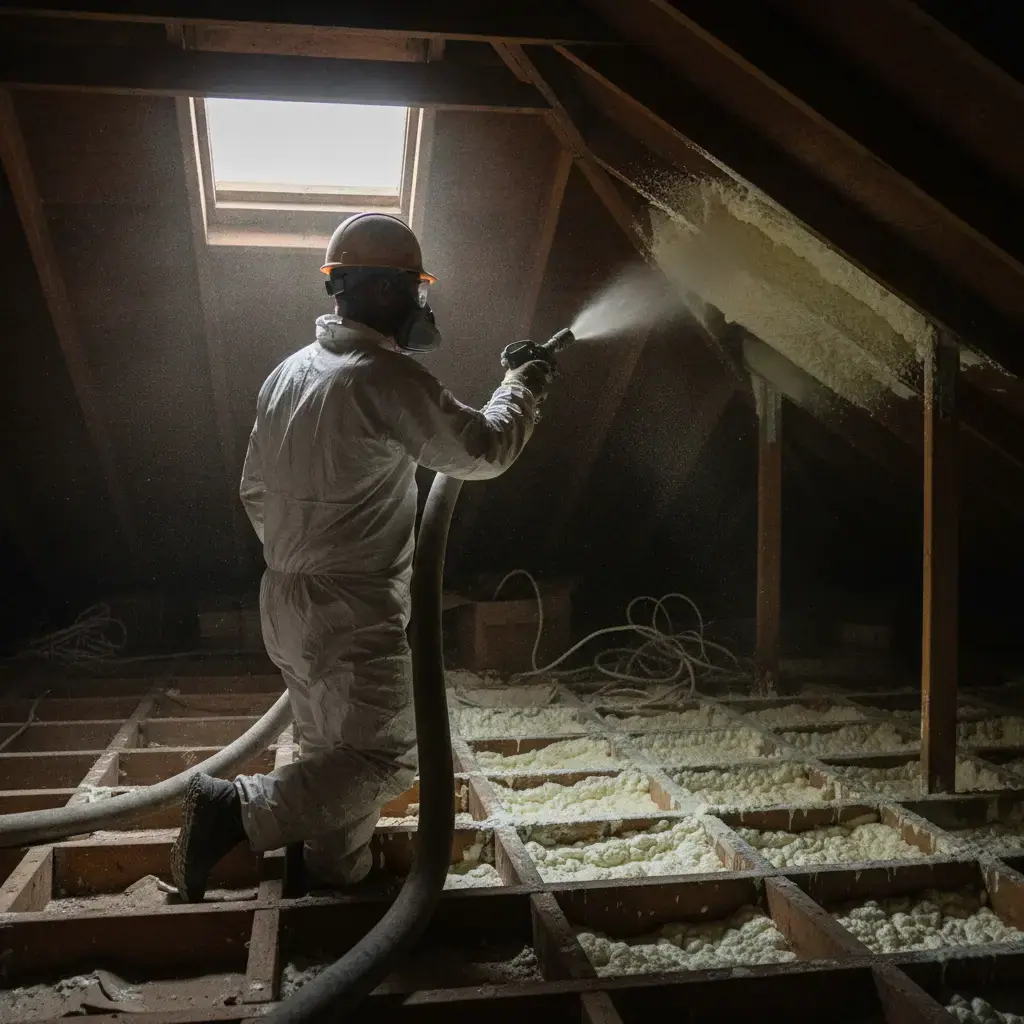
Basement Insulation in Anaheim, CA
Energy-Saving Basement Insulation for Anaheim, CA Homes — Licensed & Insured
Need basement insulation in Anaheim, CA? Climate Guard offers spray foam, rigid board & blow-in solutions. Free quotes. Call (858) 927-1082 today!
Basement insulation is the process of applying thermal and moisture barriers to the walls, ceiling, and floor assemblies of a below-grade or partially below-grade space to regulate temperature, control humidity, and reduce energy loss. In Anaheim, CA — where Mediterranean climate conditions bring warm, dry summers with temperatures routinely exceeding 95°F and mild, occasionally damp winters influenced by Pacific storm systems — a properly insulated basement is essential for year-round comfort and structural integrity.
Climate Guard Attic Insulation specializes in basement insulation for Anaheim homeowners, delivering expert assessments, professional-grade materials, and installations tailored to Southern California’s unique soil conditions, local building codes, and the specific challenges posed by Orange County’s coastal-adjacent climate. Whether you are finishing a basement, replacing failing insulation, or addressing moisture intrusion, our team brings the local knowledge and technical skill your home deserves.
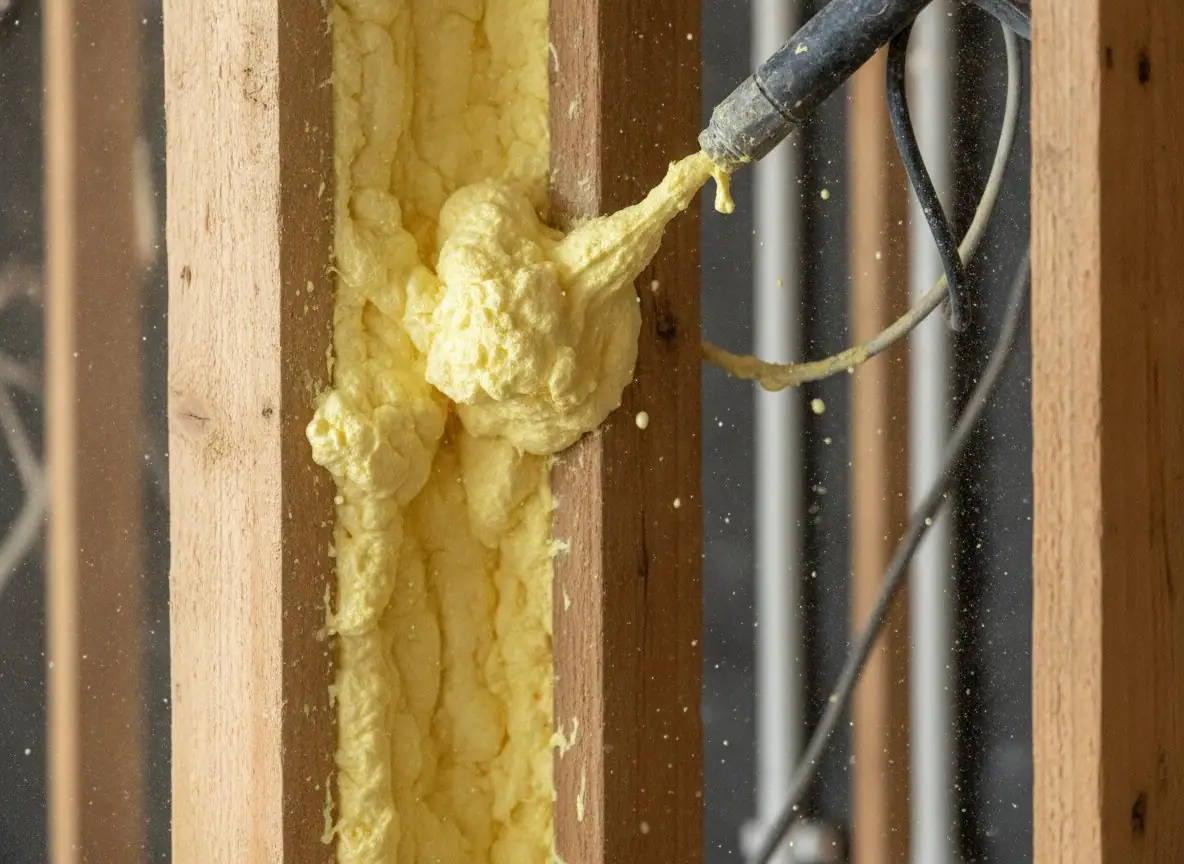
Understanding Basement Insulation in Anaheim, CA
What Is Basement Insulation?
Basement insulation refers to the strategic placement of insulating materials — such as spray foam, rigid foam board, fiberglass batts, or blown-in cellulose — along the interior or exterior walls of a basement, across rim joists, and sometimes across the slab floor. The goal is to create a continuous thermal envelope that slows the transfer of heat between the conditioned living space above and the unconditioned or semi-conditioned basement below.
A Brief History of Basement Construction in Southern California
Basements have historically been less common in Southern California than in colder regions of the United States, largely because frost-depth requirements — the reason most basements exist in the Northeast and Midwest — are virtually nonexistent in Orange County. However, Anaheim’s residential building boom during the post-World War II era of the late 1940s through the 1960s produced many homes in neighborhoods like West Anaheim and the Anaheim Colony Historic District that do feature partial basements, utility basements, or deep crawl-adjacent spaces. Homes built during the 1970s and 1980s tract-home expansion along the Anaheim Hills corridor often include semi-finished lower levels that function similarly to traditional basements.
Read moreShow less
Prevalence and Building Types in Anaheim
Anaheim’s housing stock is diverse. Single-family homes constructed between the 1950s and 1980s dominate neighborhoods such as the Retail Center District and South Anaheim, while newer construction in Anaheim Hills features larger footprints with walk-out lower levels on sloped lots. Older homes frequently suffer from original insulation that has degraded, become moisture-saturated, or simply never met modern R-value standards. California’s Title 24 Building Energy Efficiency Standards now require basement walls in new construction to achieve a minimum of R-13 for wood-framed walls, and many existing homes fall far short of this benchmark.
Understanding the age, construction method, and moisture history of your specific Anaheim home is the first step toward selecting the right insulation system — a process Climate Guard Attic Insulation handles with a thorough on-site evaluation before any work begins.
Learn more about our spray foam insulation services
Why Basement Insulation Is Needed in Anaheim, CA
Anaheim’s Mediterranean Climate and Thermal Bridging
Anaheim sits in the Santa Ana Plain at an elevation of approximately 160 feet above sea level, experiencing a semi-arid Mediterranean climate classified as Köppen BSk/Csa on its fringes. Summer highs regularly reach 95°F to 105°F, particularly during late August and September when the notorious Santa Ana wind events — hot, dry offshore winds that funnel through the Cajon and Santa Ana passes — drive temperatures well above seasonal averages. The record heat event of September 6–8, 2022, saw parts of Orange County record temperatures above 100°F for three consecutive days. Without adequate basement insulation, this extreme surface heat conducts downward through uninsulated slab edges and rim joists, raising underground space temperatures by 15°F to 20°F above optimal levels.
Soil Conditions: Expansive Clays and Moisture Migration
Anaheim’s underlying soils — mapped by the USDA Natural Resources Conservation Service as predominantly Hanford sandy loam and Ramona sandy loam in the flatlands, with patches of Myford sandy loam in the hills — have moderate to high shrink-swell potential when clay lenses are present beneath developed parcels. Seasonal moisture fluctuations cause these soils to expand in winter and contract in summer, creating micro-movement that can open hairline cracks in basement walls as small as 1/16 inch. Even cracks of this size allow capillary moisture migration into the basement cavity, wetting fiberglass batt insulation and reducing its effective R-value by up to 40 percent within a single wet season.
Winter Rainfall and the Atmospheric River Effect
While Anaheim averages only 13.6 inches of annual rainfall (compared to the national average of 38 inches), that precipitation is highly concentrated. The atmospheric river events of January 2023 delivered more than 6 inches of rain to Orange County in under 72 hours, overwhelming drainage systems and causing groundwater levels in low-lying areas such as West Anaheim and the Platinum Triangle district near the Santa Ana River to rise temporarily within 18 to 24 inches of the surface. Homes with uninsulated or poorly insulated basements in these zones experienced significant condensation and moisture infiltration, directly damaging stored belongings and structural wood members.
Urban Heat Island and Energy Cost Pressures
Anaheim’s densely developed urban core — particularly along Lincoln Avenue, Ball Road, and the Resort District surrounding Disneyland — contributes to a measurable urban heat island effect, raising ambient nighttime temperatures by 4°F to 7°F compared to surrounding rural areas. This suppresses the natural cooling effect that basements provide in temperate climates, making insulation the primary defense against heat gain from above. Southern California Edison rates for Anaheim residents in 2024 reached a peak-period tier-2 rate of approximately $0.52 per kWh, meaning uninsulated basements can add $80 to $200 per month to summer cooling bills in a typical 1,800-square-foot home.
Specific Neighborhood Vulnerabilities
Homes in the Anaheim Colony Historic District (bounded roughly by Lemon Street, Atchison Street, Sycamore Street, and South Street) were built predominantly between 1910 and 1940 and feature original concrete basement walls with no insulation whatsoever. In Anaheim Hills, steep-lot homes along roads such as Serrano Avenue and Nohl Ranch Road have walk-out basements exposed to direct solar gain on at least one wall face, compounding heat transfer challenges. Both scenarios demand professional insulation solutions specifically matched to the structure.
Free, no-obligation estimates
Talk to Climate Guard Attic Insulation
Tell us what you need and we’ll take it from there.
Signs You Need Basement Insulation in Your Anaheim Home
Thermal Comfort Indicators
- Basement or lower-level rooms feel 10°F or more cooler than the main living floor in winter and uncomfortably hot (above 80°F) in summer even with HVAC running.
- Cold floors above the basement, particularly noticeable in kitchens and hallways built over uninsulated rim joist areas.
- HVAC system running continuously during Anaheim’s peak summer months (July–September) without achieving set-point temperatures.
Moisture and Structural Warning Signs
- Visible condensation on basement walls after rainfall events, particularly following atmospheric river storms common to Orange County.
- Musty or earthy odor indicating mold or mildew growth within degraded fiberglass batts.
- Efflorescence (white chalky mineral deposits) on concrete walls, indicating chronic moisture migration through the foundation.
- Sagging, discolored, or visibly wet insulation batts visible between floor joists.
- Rust stains on metal fasteners or HVAC ductwork in the basement space.
Energy and Financial Indicators
- Southern California Edison bills consistently 20–30 percent above neighborhood average during summer billing cycles.
- Insulation that is more than 15–20 years old and has never been replaced or assessed.
Urgency Note: Moisture-saturated insulation can support mold colony growth within 24–48 hours in Anaheim’s warm temperatures. If you observe wet insulation after any storm event, contact Climate Guard Attic Insulation immediately at (858) 927-1082.
Our process
Our Basement Insulation Process in Anaheim, CA
- 01
Free On-Site Assessment (Day 1 — 1 to 2 Hours)
Our certified technician visits your Anaheim home to inspect the basement’s current insulation condition, measure existing R-values with calibrated thermal imaging equipment, identify moisture intrusion points, and assess structural elements including rim jois
- 02
Moisture Remediation Planning (Day 1–3)
If moisture issues are identified — common in West Anaheim homes near the Santa Ana River flood plain — we coordinate with our crawl space encapsulation team to address water infiltration before insulation is installed. Attempting to insulate over active moist
- 03
Old Insulation Removal (Day 2–4 — 4 to 8 Hours)
Degraded, wet, or pest-contaminated insulation is carefully removed using HEPA-equipped vacuum systems and disposed of in compliance with Orange County waste management regulations. Work areas are sealed with temporary barriers to prevent particulate migration
- 04
Air Sealing and Rim Joist Treatment (Day 3–5 — 2 to 4 Hours)
All penetrations, gaps, and rim joist cavities are sealed with two-component closed-cell spray foam prior to insulation installation. This step is particularly important in Anaheim’s older housing stock, where original construction left gaps that allow conditi
- 05
Insulation Installation (Day 4–6 — 4 to 12 Hours Depending on Square Footage)
Selected insulation material is applied to all designated surfaces — walls, rim joists, and floor assemblies — to achieve target R-values meeting or exceeding California Title 24 standards. Our crews adapt application techniques to Anaheim’s specific condition
- 06
Quality Inspection and Thermal Verification (Day 5–7 — 1 to 2 Hours)
A post-installation thermal imaging scan confirms uniform coverage without voids or thermal bridges. Results are documented and shared with the homeowner.
- 07
Final Walk-Through and Documentation (Day 6–8 — 30 to 60 Minutes)
We walk you through the completed work, explain maintenance requirements, and provide all documentation needed for California utility rebate programs and permit sign-off where applicable.
Basement Insulation Methods We Use in Anaheim
Closed-Cell Spray Foam Insulation
Closed-cell spray polyurethane foam achieves R-values of approximately R-6.5 to R-7 per inch — the highest per-inch rating of any common insulation material. It also acts as a vapor barrier at 2 inches or more of thickness, making it the preferred choice for Anaheim basement walls experiencing capillary moisture migration. It is especially effective along foundation walls in the Anaheim Hills area where hillside groundwater pressure is a factor. Explore our spray foam insulation options
Open-Cell Spray Foam Insulation
At R-3.7 per inch, open-cell foam provides excellent air sealing and acoustic dampening at a lower material cost than closed-cell. It is best suited for interior basement ceiling applications in drier Anaheim zones where vapor drive is not a primary concern.
Rigid Foam Board Insulation
Extruded polystyrene (XPS) or polyisocyanurate boards (R-4 to R-6.5 per inch) are mechanically fastened or adhered to basement walls before drywall installation. This method is commonly used in Anaheim’s partially finished basements where homeowners want to maximize usable floor space while still achieving Title 24 compliance.
Blow-In Cellulose or Fiberglass
Blown-in insulation is the most cost-effective solution for insulating accessible floor joist cavities above an unfinished basement. Cellulose, made from recycled paper with borate fire retardant, achieves R-3.2 to R-3.8 per inch and performs well in Anaheim’s moderate humidity range. Learn more about our blow-in insulation services
Combination Systems
Many Anaheim basements benefit from a hybrid approach: closed-cell spray foam on the lower 2 feet of foundation walls (where moisture risk is highest), rigid foam board on the upper wall sections, and blown-in cellulose across the floor joist cavity above. This system balances moisture control, thermal performance, and budget efficiency.
Basement Insulation Cost in Anaheim, CA
Understanding basement insulation costs helps Anaheim homeowners plan their projects and evaluate quotes accurately. Prices below reflect typical 2024 market rates for the Anaheim, Orange County area.
Cost by Insulation Type
- Closed-Cell Spray Foam: $1.50–$3.50 per board foot installed (1 board foot = 1 sq. ft. at 1 inch thickness). A 1,000-square-foot basement wall surface insulated to 2 inches typically costs $3,000–$7,000.
- Open-Cell Spray Foam: $0.80–$1.50 per board foot installed. The same 1,000-square-foot surface at 3.5 inches costs approximately $2,800–$5,250.
- Rigid Foam Board: $1.00–$2.50 per square foot installed, including adhesive or mechanical fasteners and seam taping.
- Blown-In Cellulose or Fiberglass: $0.85–$1.75 per square foot for floor joist cavity work, making it the most budget-friendly option for accessible spaces.
Read moreShow less
Full Project Cost Ranges
- Small basement (under 600 sq. ft.): $1,800–$4,500
- Medium basement (600–1,200 sq. ft.): $4,500–$10,000
- Large or complex basement (over 1,200 sq. ft.): $10,000–$18,000+
Anaheim-Specific Pricing Factors
Orange County labor rates run approximately 15–20 percent above the California statewide average. Permit fees through the City of Anaheim Building Division for insulation work typically range from $150 to $400 depending on project scope. Older homes in the Anaheim Colony Historic District may require additional air sealing work around original wood-frame construction, adding $300–$800 to total project cost.
Southern California Edison and SoCalGas both offer energy efficiency rebates for qualifying insulation upgrades. Our team helps Anaheim homeowners identify and apply for available incentives, which can offset $300–$1,500 of project cost. Call (858) 927-1082 for a free, no-obligation quote.

Anaheim Neighborhoods We Serve
Anaheim Colony Historic District
One of Anaheim’s oldest residential areas, with homes dating from 1910 to 1940. Many properties feature original concrete or brick basement walls with zero insulation and outdated vapor management. These homes require careful air sealing around original wood structural members and moisture assessment before any insulation is installed.
Anaheim Hills
Built primarily from the late 1970s through the 1990s on hillside lots, Anaheim Hills homes frequently feature walk-out lower levels exposed to direct sun on south and west faces. Rigid foam board combined with closed-cell spray foam on exposed wall sections provides optimal thermal protection for this unique building configuration.
West Anaheim / Platinum Triangle
Lower-elevation zones adjacent to the Santa Ana River. Homes and mixed-use buildings in this area face the highest groundwater influence risk during atmospheric river events. Closed-cell spray foam vapor barriers are strongly recommended for all basement wall surfaces in this district.
South Anaheim / Ball Road Corridor
Dense tract home development from the 1960s and 1970s, many with utility basements and aging fiberglass batt insulation. Blown-in replacement insulation and rim joist spray foam sealing represent the most cost-effective upgrade path for these properties.
Basement Insulation Maintenance Tips for Anaheim Homeowners
- Inspect after major rain events: Following atmospheric river storms — which can deliver 3+ inches in 24 hours to Anaheim — visually check basement walls for new moisture staining or efflorescence and inspect insulation for wet spots.
- Check gutters and downspouts twice a year: Clogged gutters direct roof runoff against the foundation, accelerating moisture infiltration into basement walls. Clean in October before winter rains and in April after spring storms.
- Maintain interior humidity below 60 percent: Use a hygrometer in the basement. Anaheim’s warm summers can push interior humidity high; a dehumidifier helps prevent condensation on insulated surfaces.
- Seal new wall penetrations promptly: Any new plumbing, electrical, or HVAC penetrations through insulated basement walls should be sealed with spray foam or caulk within 48 hours to prevent air and moisture bypass.
- Schedule a professional thermal scan every 5–7 years: Thermal imaging detects insulation voids and moisture intrusion invisible to the naked eye, allowing early remediation before structural damage occurs.
- Monitor for pest activity: In Anaheim’s warm climate, termites and rodents can tunnel through foam insulation. Annual pest inspections protect your insulation investment.
- Verify HVAC returns are unobstructed: Proper airflow into the basement space helps manage temperature differentials that can stress insulation adhesion over time.
Why Choose Climate Guard Attic Insulation for Basement Insulation in Anaheim, CA
Climate Guard Attic Insulation is a locally focused insulation contractor serving Anaheim and the greater Orange County area. Our technicians have direct, hands-on experience with the specific soil conditions, building eras, and climate challenges that affect Anaheim homes — from the historic bungalows of the Colony District to the hillside walk-outs of Anaheim Hills.
We use professional-grade equipment and materials, including high-pressure spray foam rigs calibrated for Southern California’s temperature and humidity ranges. Every project begins with a thorough on-site assessment and ends with a thermal imaging verification scan — no guesswork, no shortcuts.
Our team is knowledgeable in California Title 24 energy code requirements and Orange County building permit processes, ensuring your project is compliant from day one. We also guide homeowners through available Southern California Edison and state energy efficiency rebate programs to maximize your return on investment.
Ready to make your Anaheim home more comfortable and energy-efficient? Call (858) 927-1082 to schedule your free assessment today.
FAQ
Frequently Asked Questions — Basement Insulation in Anaheim, CA
How much does basement insulation cost in Anaheim, CA?
The cost of basement insulation in Anaheim typically ranges from $1,800 for small utility basements to $18,000 or more for large, complex projects requiring moisture remediation and high-performance spray foam systems. The most common single-family home basement project in Anaheim falls between $4,500 and $10,000. Orange County labor rates and City of Anaheim permit fees contribute to pricing that runs 15–20 percent above the California state average. Call (858) 927-1082 for a site-specific quote.
Do I need a permit for basement insulation in Anaheim?
In most cases, insulating an existing basement in Anaheim requires a permit from the City of Anaheim Building Division, particularly when work involves more than 1,000 square feet of insulation replacement or when spray foam is applied to structural wall assemblies. Permit fees typically range from $150 to $400. Climate Guard handles the permit application process on your behalf.
How long does basement insulation installation take in Anaheim?
A typical basement insulation project in Anaheim takes between 3 and 7 business days from initial assessment to final walk-through. This includes 1 day for assessment, 1–2 days for old insulation removal if needed, and 1–3 days for installation and thermal verification depending on basement size and method selected. Projects requiring moisture remediation may add 2–5 additional days.
Is spray foam insulation safe for my Anaheim home?
Yes. Once fully cured — typically within 24 hours of application — spray polyurethane foam is inert and safe for occupants. During application, the area must be vacated and ventilated for a minimum of 24 hours. Our crews follow all California OSHA safety protocols and building code requirements for foam application in occupied residential structures.
What R-value do I need for my Anaheim basement?
California Title 24 Energy Code requires a minimum of R-13 for new basement wall insulation in wood-framed construction and R-10 for continuous rigid foam systems. For existing Anaheim homes, we recommend achieving at minimum R-13 on all basement walls and R-19 across floor joist cavities where feasible. Homes in the lower-elevation West Anaheim area with higher moisture exposure may benefit from closed-cell foam systems that achieve R-13 at just 2 inches while simultaneously providing vapor barrier protection.
Can I insulate my basement if I have moisture problems?
Moisture must be addressed before insulation is installed. Installing insulation over active water infiltration traps moisture within wall cavities, accelerating mold growth and structural wood decay. Climate Guard’s process always includes a moisture assessment phase. If water intrusion is identified, we coordinate crawl space encapsulation and drainage improvements prior to insulation work. Learn about crawl space insulation solutions
Does basement insulation help with Anaheim’s summer heat?
Absolutely. Properly insulated basement walls and rim joists reduce heat gain from the ground and exterior walls by 40–60 percent, contributing to measurably lower air conditioning loads during Anaheim’s peak summer months of July through September. During Santa Ana wind events when ambient temperatures can exceed 100°F, an insulated basement provides a naturally cooler refuge and reduces whole-home HVAC cycling by 20–35 percent.
How do I find basement insulation services near me in Anaheim?
Climate Guard Attic Insulation serves all of Anaheim and surrounding Orange County communities including Santa Ana, Fullerton, Garden Grove, Orange, Tustin, Yorba Linda, and Westminster. Call (858) 927-1082 or use our online contact form to schedule a free on-site consultation with a local insulation specialist who knows Anaheim’s neighborhoods and building conditions firsthand.
Get Your Free Basement Insulation Quote in Anaheim, CA Today
Don’t let an uninsulated or under-insulated basement drain your energy budget, compromise your comfort, or put your home’s structural integrity at risk. Whether you’re in the Anaheim Colony Historic District, Anaheim Hills, West Anaheim, or anywhere across Orange County, Climate Guard Attic Insulation is ready to deliver a professional, code-compliant insulation solution built for Southern California’s unique climate demands.
Our process is simple: we assess, we plan, we install, and we verify — all with clear communication and transparent pricing at every step.
- Call us now: (858) 927-1082
- Service Area: Anaheim, Santa Ana, Fullerton, Garden Grove, Orange, Tustin, Yorba Linda, Westminster, and all of Orange County
Schedule your free basement insulation assessment in Anaheim today
Get in touch
Find insulation help near you
Request a free estimate online or give us a call — our team will follow up quickly.
- Call us(858) 927-1082
- Visit1127 N Fountain Way, Anaheim, CA 92806
- HoursMon - Sun 07:00-19:00