
Crawl Space Insulation in Anaheim, CA
Energy-Saving Crawl Space Insulation in Anaheim, CA for Anaheim, CA Homes — Licensed & Insured
Need crawl space insulation in Anaheim, CA? Climate Guard offers expert installation, encapsulation & removal. Free estimates — call 858-927-1082 today!
Crawl space insulation is the process of thermally and moisture-sealing the underfloor cavity of your home, creating a barrier that prevents heat loss, moisture intrusion, and pest infiltration from the ground up. In Anaheim, CA, where the Santa Ana winds drive temperature swings and marine air from the Pacific pushes humidity into coastal-adjacent neighborhoods, an uninsulated or poorly insulated crawl space can quietly sabotage your home’s comfort and energy efficiency year-round.
At Climate Guard Attic Insulation, we specialize in professional crawl space insulation solutions tailored specifically to the soil conditions, building stock, and climate patterns of Anaheim and the surrounding Orange County area. Whether your home sits over a vented crawl space in the Anaheim Hills or a shallow subfloor cavity in a mid-century Placentia Avenue neighborhood, our team delivers the right insulation method for your specific structure. Call us today at 858-927-1082 to schedule a free assessment.

Understanding Crawl Space Insulation in Anaheim, CA
A crawl space is the shallow, unfinished area beneath the ground floor of a home that provides access to plumbing, electrical wiring, and HVAC ductwork. Unlike a basement, a crawl space is not designed for living or storage — it typically ranges from 18 inches to 4 feet in height. Without proper insulation, this cavity becomes a direct conduit for energy loss, moisture damage, and air quality problems throughout the entire home above it.
Crawl space insulation dates back to mid-20th century building practices, when California’s postwar housing boom saw rapid residential construction across cities like Anaheim. Thousands of homes built during the 1950s through 1970s — particularly around the West Anaheim and Anaheim Colony Historic District areas — were constructed with open vented crawl spaces using fiberglass batts stapled between floor joists. At the time, this was considered adequate. Modern building science has since demonstrated that this approach fails to account for vapor drive from the soil, seasonal humidity fluctuations, and the degradation of batt insulation over decades.
Read moreShow less
Today, insulation professionals distinguish between two primary crawl space strategies: the vented crawl space approach, where floor joists are insulated and outside air is allowed to circulate, and the encapsulated crawl space approach, where the entire cavity — walls, floor, and ceiling — is sealed with a vapor barrier and insulated to create a semi-conditioned space. The encapsulation method has become the gold standard in Southern California climates, particularly in areas like Anaheim where seasonal moisture from December through March can saturate open vented cavities.
In Anaheim, the prevalence of single-family homes built on raised foundations — especially in neighborhoods like the Rancho La Palma corridor and parts of East Anaheim — makes crawl space insulation a common and critical service. Condominiums and slab-on-grade homes do not require this service, but for the tens of thousands of raised-foundation properties in the city, proper crawl space insulation is one of the highest-return home improvements available.
Why Crawl Space Insulation Is Needed in Anaheim, CA
Anaheim’s Climate and Its Impact on Crawl Spaces
Anaheim sits inland from the Pacific Ocean by approximately 25 miles, placing it in a zone that experiences a semi-arid Mediterranean climate with a critical twist: the city is regularly affected by both marine layer intrusion from the west and hot, dry Santa Ana wind events from the east. These opposing forces create a crawl space environment that cycles between high humidity and extreme dryness — a pattern that accelerates deterioration of unprotected insulation, floor joists, and vapor barriers.
During the winter rainy season — typically November through March — Anaheim receives an average of 13 to 15 inches of annual rainfall, much of it concentrated in brief, intense events. The Los Angeles Basin storms of January 2023, for instance, delivered over 4 inches of rain to Orange County within 48 hours, causing widespread soil saturation across Anaheim. When ground moisture rises through evaporation into uninsulated crawl spaces, it condenses on cold joists and subfloor materials, leading to wood rot, mold growth, and insulation sagging.
Soil Conditions in Anaheim
Anaheim’s underlying soil is predominantly composed of alluvial fan deposits — sandy loams and silty clays left by ancient Santa Ana River flooding events. These soil types, classified as Hanford and Tujunga series by the USDA Web Soil Survey, have moderate to high permeability and limited water retention capacity. This means that during rain events, moisture moves quickly through the soil but also evaporates readily from the surface directly beneath homes, driving vapor into crawl spaces year-round. Homes near the Santa Ana River corridor in southwest Anaheim are particularly vulnerable due to historically higher water table levels.
Santa Ana Wind Events and Thermal Stress
Santa Ana wind events — which occur primarily between October and February — can push temperatures in Anaheim above 90°F with relative humidity dropping below 10%. Following these events, nighttime temperatures can fall to the low 40s°F within hours. This rapid thermal cycling stresses existing batt insulation, causing it to compress and lose R-value over time. Homes in Anaheim Hills, which sit at elevations of 600 to 1,400 feet above sea level, experience the most dramatic temperature swings and are particularly in need of properly rated crawl space insulation.
Aging Housing Stock
A significant portion of Anaheim’s residential housing was built between 1945 and 1975. According to U.S. Census data, over 40% of Anaheim’s housing units predate 1980. Insulation materials used in these homes — where any crawl space insulation exists at all — are typically degraded fiberglass batts with R-values that have dropped well below the current California Title 24 energy code requirement of R-19 for floor assemblies in Climate Zone 8, which covers Anaheim. Bringing these homes into compliance protects both property value and occupant comfort.
Free, no-obligation estimates
Talk to Climate Guard Attic Insulation
Tell us what you need and we’ll take it from there.
Signs You Need Crawl Space Insulation in Anaheim
Energy and Comfort Indicators
- Floors feel noticeably cold during Anaheim’s winter months, even when your HVAC system is running
- Rooms on the ground floor are significantly cooler or harder to heat than upper-level rooms
- Monthly energy bills are higher than average for similar-sized Anaheim homes — Southern California Edison average residential usage benchmarks can help you compare
- HVAC system runs longer cycles than expected to maintain set temperatures
Moisture and Structural Warning Signs
- Musty or damp odors rising through floor vents or from beneath baseboards — especially after January or February rain events
- Visible moisture, standing water, or efflorescence on crawl space walls or floors
- Wood rot, soft spots, or bounce in your floors — indicating joist deterioration from prolonged moisture exposure
- Visible mold growth on subfloor materials or existing insulation
- Sagging or fallen batt insulation hanging from the floor joists
Pest and Air Quality Signs
- Evidence of rodent activity (droppings, nesting materials) in the crawl space — common in older Anaheim neighborhoods where displaced wildlife enters foundations
- Increased allergy symptoms indoors, which can indicate mold spores rising from a damp crawl space
- Insect infestations, including termites or silverfish attracted to damp wood
Urgency note: If you observe standing water or visible mold, treat this as an urgent situation requiring professional assessment within days, not weeks.
Our process
Our Crawl Space Insulation Process in Anaheim
- 01
Free Inspection and Assessment (Day 1)
Our technician performs a comprehensive crawl space inspection, documenting existing insulation R-values, moisture levels using a calibrated meter, visible mold or rot, pest evidence, and vapor barrier condition. In Anaheim homes, we pay particular attention t
- 02
Moisture Remediation and Drying (Days 1–3, if needed)
If moisture intrusion is identified, we address it before installing new insulation. This may include temporary dehumidification, drainage improvements, or coordination with a waterproofing specialist. Installing insulation over an active moisture problem woul
- 03
Old Insulation Removal and Debris Cleaning (Day 2–3)
Degraded, contaminated, or pest-damaged insulation is removed using commercial-grade vacuum equipment and safely bagged for disposal. The crawl space is cleaned of debris, rodent droppings, and any foreign materials. Learn about our insulation removal services
- 04
Vapor Barrier Installation (Day 3–4)
A heavy-duty polyethylene vapor barrier (minimum 6-mil, typically 12-mil for Anaheim’s soil conditions) is installed across the crawl space floor and sealed at the seams and walls. This is critical for homes in lower-elevation Anaheim neighborhoods where soil
- 05
Insulation Installation (Day 4–5)
Depending on your home’s structure and the chosen method, we install the selected insulation product — spray foam, fiberglass batts, or blown-in — to achieve a minimum R-19 per California Title 24 requirements for Climate Zone 8. Anaheim Hills properties at hi
- 06
Air Sealing and Pest Exclusion (Day 5)
Penetrations, gaps around pipes, and foundation vents are sealed to prevent conditioned air loss and pest re-entry. View our rodent proofing services
- 07
Final Inspection and Documentation (Day 5–6)
We conduct a post-installation walkthrough, provide photographic documentation of completed work, and review energy savings expectations with you based on your specific home’s characteristics.
Crawl Space Insulation Methods We Use in Anaheim
Spray Foam Insulation
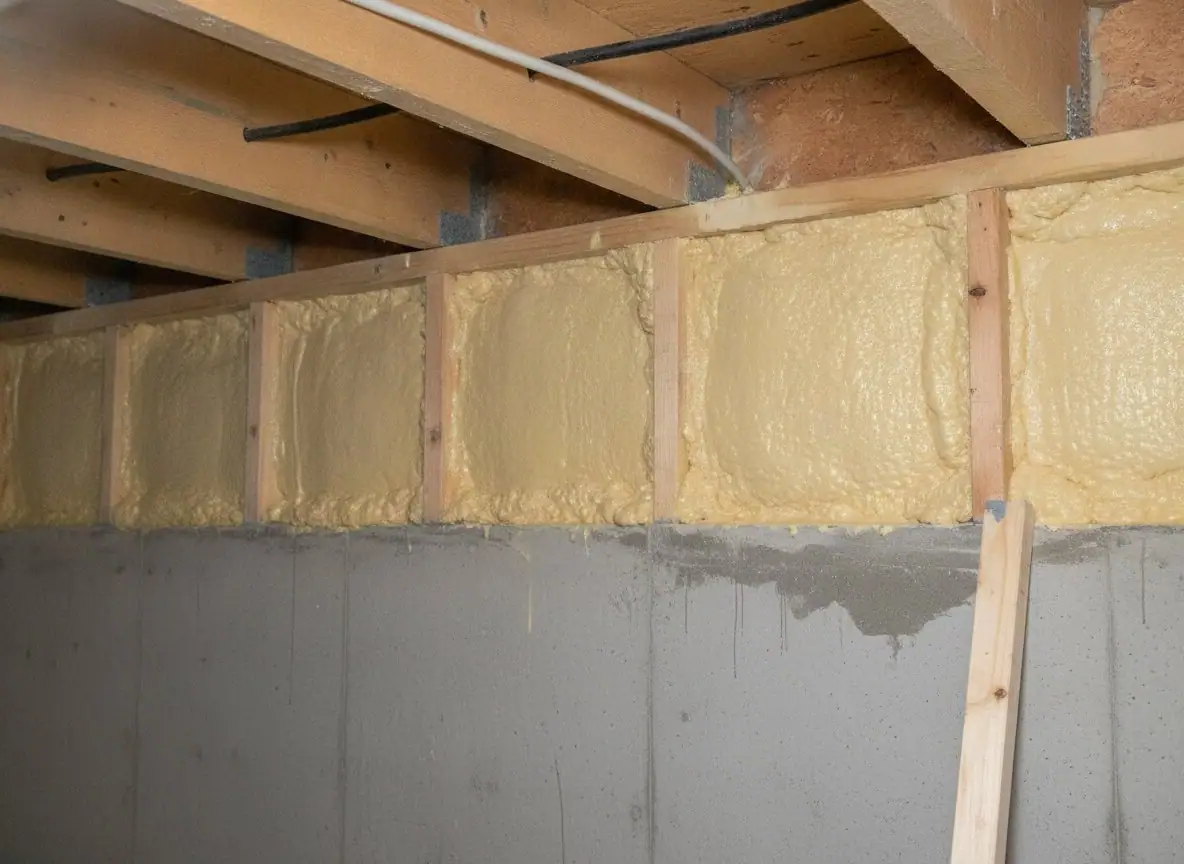
Closed-cell spray polyurethane foam (SPF) is the premium option for Anaheim crawl spaces. Applied directly to the underside of the subfloor or crawl space walls, it achieves an R-value of approximately R-6 to R-7 per inch, provides an air and vapor barrier in one application, and adheres structurally to wood and concrete. It is the ideal choice for encapsulated crawl space conversions and for homes in high-moisture zones near the Santa Ana River. Learn more about spray foam insulation
Learn moreFiberglass Batt Insulation
Kraft-faced or unfaced fiberglass batts installed between floor joists remain a cost-effective option for vented crawl spaces in better-drained areas of Anaheim, such as the elevated terrain of Anaheim Hills. Batts must be properly supported with wire hangers to prevent sagging — a common failure mode in older homes. Explore fiberglass insulation options
Blown-In Insulation
Loose-fill cellulose or fiberglass blown-in insulation can be applied to crawl space floors in encapsulated installations. This method works well in irregularly shaped crawl spaces where batt cutting would be labor-intensive. Learn about blown-in insulation
Encapsulation System (Combination Approach)
Our most comprehensive option combines vapor barrier installation, wall insulation with rigid foam board, floor joist insulation with spray foam, and sealed vents. This transforms the crawl space into a semi-conditioned, moisture-controlled environment — strongly recommended for Anaheim homes that have experienced repeated moisture issues or rodent intrusion.
Crawl Space Insulation Cost in Anaheim, CA
Understanding the cost of crawl space insulation helps Anaheim homeowners budget appropriately and avoid being underserved by low-bid contractors who cut corners on material quality or vapor barrier thickness.
Typical Price Ranges
- Fiberglass Batt Installation (floor joists only): $1.50 – $2.50 per square foot, or approximately $1,500 – $3,500 for a typical 1,000–1,500 sq ft Anaheim home
- Spray Foam Insulation (closed-cell, floor joists): $3.00 – $5.00 per square foot, or $3,000 – $7,500 for the same footprint
- Full Encapsulation System (vapor barrier + wall insulation + spray foam): $5,000 – $15,000 depending on crawl space size, accessibility, and moisture remediation needs
- Vapor Barrier Only (6-mil to 12-mil poly): $0.50 – $1.25 per square foot installed
Read moreShow less
Factors That Affect Your Crawl Space Insulation Cost in Anaheim
- Crawl space height and accessibility: Shallow crawl spaces common in older Anaheim Colony-era homes require more labor time
- Existing insulation removal: Add $1.00 – $2.00 per square foot if old material must be extracted first
- Moisture remediation needs: Homes near low-lying Anaheim areas may require drainage work prior to insulation
- California Title 24 compliance upgrades: If your home is being permitted for renovation, code-required R-values affect material quantities
- Pest damage repair: Rodent contamination requiring decontamination adds cost
Call 858-927-1082 for a no-obligation, itemized quote specific to your Anaheim home’s crawl space dimensions and condition.
Crawl Space Insulation Neighborhoods We Serve in Anaheim
Anaheim Hills
Homes in Anaheim Hills, developed primarily from the 1970s through the 1990s at elevations up to 1,400 feet, experience the sharpest Santa Ana wind-driven temperature swings in the city. Many feature raised foundations with crawl spaces that benefit from R-25 spray foam encapsulation.
West Anaheim
West Anaheim’s postwar housing stock — predominantly built between 1950 and 1965 — features shallow crawl spaces with original, heavily degraded fiberglass batts. Proximity to the Los Angeles River watershed makes moisture management a primary concern.
Anaheim Colony Historic District
One of Orange County’s oldest residential neighborhoods, the Colony District contains Victorian-era and Craftsman bungalow homes with unique foundation configurations requiring custom insulation solutions and careful preservation of original structural elements.
East Anaheim / Anaheim Stadium Area
Mid-century tract homes in the stadium corridor commonly present with missing or fallen batt insulation and evidence of rodent activity due to the area’s commercial-to-residential transition zones. Full encapsulation with rodent exclusion is frequently recommended here.
Crawl Space Insulation Maintenance Tips for Anaheim Homeowners
- Inspect after heavy rain events: Following any Anaheim storm that delivers more than 1 inch of rainfall in 24 hours, visually check your crawl space access point for signs of water intrusion or vapor condensation.
- Check vents seasonally: Ensure foundation vents are clear of debris in fall before the rainy season and functioning properly through spring.
- Monitor for pest activity: Check for rodent entry points along the foundation perimeter, particularly after Santa Ana wind events that drive animals toward shelter.
- Inspect vapor barrier annually: Look for tears, punctures, or lifting at seam tape locations. Repair promptly with compatible barrier tape.
- Test indoor humidity: If indoor relative humidity consistently exceeds 55% in winter, your crawl space vapor control may need attention.
- Trim landscaping away from foundation: Maintain at least 6 inches of clearance between soil, mulch, or plant material and your home’s foundation vents.
- Schedule professional inspections every 3–5 years: Insulation materials shift and degrade over time, particularly in Anaheim’s thermally active climate.
Why Choose Climate Guard Attic Insulation for Your Anaheim Crawl Space
Climate Guard Attic Insulation is a professional insulation contractor with deep experience serving Anaheim and Orange County homeowners. We understand the specific challenges that Anaheim’s Mediterranean climate, Santa Ana wind patterns, and aging housing stock create for crawl space performance — and we apply that knowledge to every project we take on.
Our team provides:
Location-specific expertise:
Location-specific expertise:We know Anaheim’s soil conditions, building eras, and neighborhood-by-neighborhood moisture dynamics — not a generic Southern California approach
Comprehensive services under one roof:
Comprehensive services under one roof:From insulation removal and crawl space cleaning to rodent proofing and full encapsulation — no need to coordinate multiple contractors
Transparent, itemized quotes:
Transparent, itemized quotes:We provide detailed written estimates so you understand exactly what you’re paying for before work begins
California Title 24 knowledge:
California Title 24 knowledge:We ensure all installations meet or exceed current energy code requirements for Climate Zone 8
FAQ
Crawl Space Insulation FAQs for Anaheim Homeowners
How much does crawl space insulation cost in Anaheim, CA?
Costs range from approximately $1,500 for basic fiberglass batt installation in a smaller crawl space to $15,000 or more for a full encapsulation system with moisture remediation in a larger home. The average Anaheim single-family home with a 1,200 sq ft footprint typically falls between $3,000 and $8,000 for a comprehensive crawl space insulation project. Call 858-927-1082 for a free, site-specific estimate.
How long does crawl space insulation installation take in Anaheim?
A straightforward batt replacement project can be completed in one to two days. A full encapsulation system — including vapor barrier, wall insulation, spray foam, and air sealing — typically takes three to five days. If moisture remediation or old insulation removal is required, add one to two additional days.
Does Anaheim require permits for crawl space insulation?
In most cases, routine insulation replacement does not require a building permit from the City of Anaheim’s Building Division. However, if your project involves structural repairs, new vapor barrier systems tied to drainage improvements, or is part of a larger permitted renovation, a permit may be required. We will advise you during our assessment.
What R-value is required for crawl space insulation in Anaheim?
Anaheim falls within California’s Climate Zone 8. California Title 24 energy code currently requires a minimum of R-19 for floor assemblies over unconditioned crawl spaces. For encapsulated crawl spaces with insulated walls, R-8 on walls and R-19 on the ceiling/subfloor are common targets. Homes in Anaheim Hills at higher elevations may benefit from exceeding these minimums.
Is crawl space encapsulation worth it in Anaheim’s climate?
Yes — particularly for homes in lower-elevation West Anaheim and areas near the Santa Ana River corridor where soil moisture evaporation is highest. Encapsulation eliminates the seasonal moisture cycling that degrades open vented crawl spaces, protects wood structure from rot, and can reduce HVAC energy consumption by 10–20% according to Department of Energy estimates.
How do I know if my existing crawl space insulation has failed?
Common failure indicators in Anaheim homes include sagging or fallen batts, musty odors rising through the floor, cold ground-floor rooms despite adequate heating, and visible mold or moisture on the vapor barrier. If your insulation was installed before 2000 and has never been inspected, a professional assessment is strongly recommended.
Do you remove old insulation before installing new crawl space insulation?
Yes. We always assess existing insulation before recommending removal. If the existing material is degraded, contaminated with rodent droppings, moldy, or has fallen from the joists, removal is required before new insulation can be effectively installed. Learn about our insulation removal process
Can crawl space insulation help with rodent problems in Anaheim?
Insulation alone does not prevent rodents, but when combined with our rodent proofing service — which seals foundation penetrations and entry points — a full crawl space encapsulation creates a significantly less hospitable environment for rodents. We frequently bundle these services for older Anaheim homes. Learn about rodent proofing
Get Your Free Crawl Space Insulation Estimate in Anaheim Today
Don’t let an uninsulated or failing crawl space drain your energy budget or compromise your home’s structural health another Anaheim winter. Whether you’re in Anaheim Hills, West Anaheim, the Colony Historic District, or anywhere in between, Climate Guard Attic Insulation is ready to provide an honest, no-pressure assessment and a detailed written quote.
Our team serves Anaheim homeowners with professional crawl space insulation solutions built for Orange County’s specific climate, soil, and building conditions. Call us now at 858-927-1082 to schedule your free on-site inspection. We’ll assess your crawl space, explain your options, and give you a clear plan to protect your home from the ground up.
Climate Guard Attic Insulation — Anaheim’s Crawl Space Insulation Specialists
Phone: 858-927-1082
Get in touch
Find insulation help near you
Request a free estimate online or give us a call — our team will follow up quickly.
- Call us(858) 927-1082
- Visit1127 N Fountain Way, Anaheim, CA 92806
- HoursMon - Sun 07:00-19:00